Clinicians
Their own scores, per session, without a monthly meeting.
A patient who is unhappy at session three of eight will either tell you or tell Google. Asking at the end of each session, and putting a low score in front of a human the same day, is the difference between a course you rescue and a review you reply to.
Feedback collected once, at the end, arrives too late to change anything. Asked per session, it becomes an early warning about a course that is going wrong.
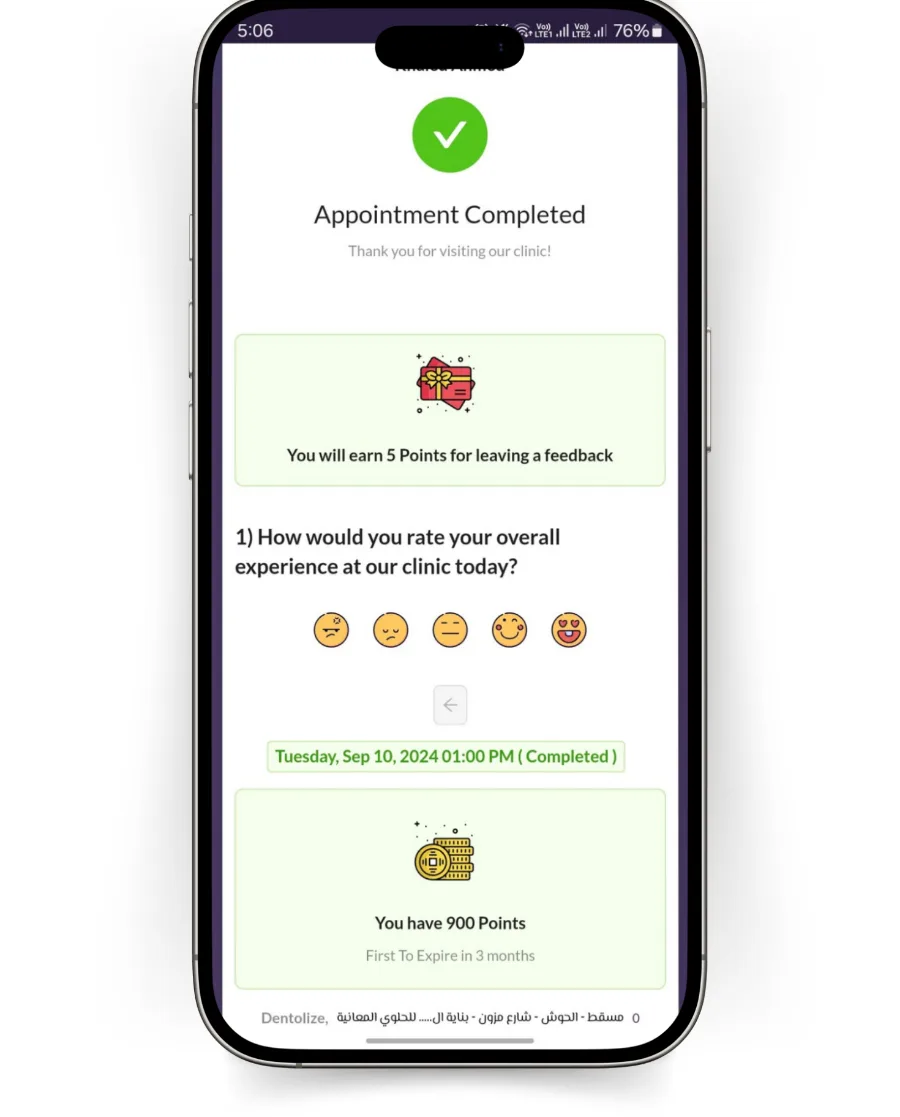
The point of collecting it is what happens next. A score below the threshold you set raises a task, to a named person, the same day.
A happy patient will leave a review if asked at the right moment and given a link. The right moment is the session they were happy about.
Feedback that only the owner sees changes nothing. It has to reach whoever can do something the same day.
Their own scores, per session, without a monthly meeting.
A low score as a task with the session attached.
Patterns by branch, room and doctor rather than anecdotes.
Both collect scores. One of them collects them while something can still be done.
After the session, not at the end of the course. In a clinic running blocks of six or eight sessions, asking once at the end means finding out about session three when there is nothing left to fix.
It raises a task to a named person, with the session attached, on the threshold the clinic sets. The patient is contacted before anyone asks them for a public review.
A review link is sent to patients who scored well, at the moment the session ended. No incentive is attached to it, because offering one breaches the review platforms’ own rules.
Yes, and per room, per service and per branch, over time — which is what turns "a patient complained" into a pattern you can act on.
No. A patient who has just been asked is not asked again, and the frequency cap is set by the clinic.
Search, segment and follow up every patient the clinic has seen. Medicolize turns a patient list into something you…
Read moreEnquiries from Instagram, WhatsApp and the website in one pipeline, with the source kept all the way to the course…
Read morePrice a course rather than a visit. Medicolize tracks sessions, packages and progress from the first consultation to…
Read moreHalf an hour on your own services, packages and price list. Someone calls you back within a day.