Owners
Whether the numbers can be trusted without being assembled.
Most of the category was built around the single visit: book, see, bill, done. That is the easy case. A medical clinic runs courses, packages, insurers, several specialties and more than one branch — and the difference between systems is whether those are features bolted on, or the thing the record was built around.
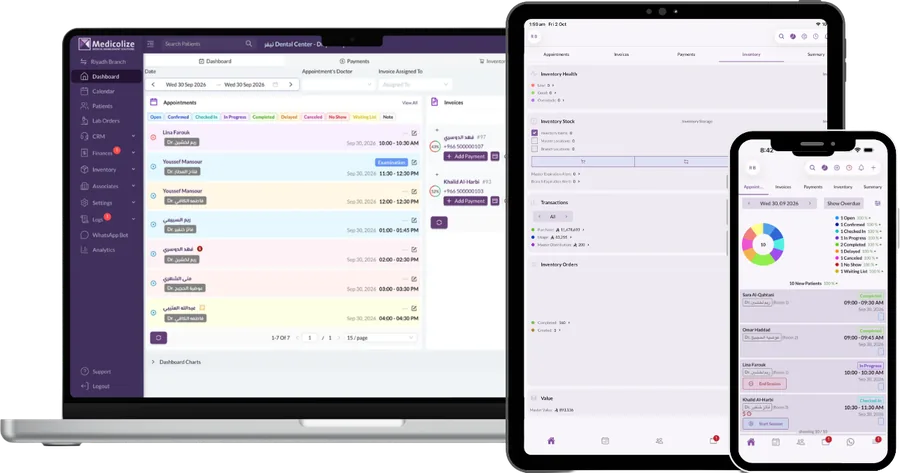
Clinic management software is the system the whole practice runs on: the record, the calendar, the money and the reporting over all of it. If those live in separate tools, somebody spends their week reconciling them.
This is where most of the category stops. A course of treatment is not eight appointments; it is one thing with eight parts, and everything from pricing to progress to revenue recognition depends on the system knowing that.
Demos are designed to go well. These are the questions that separate a system that runs a practice from one that records visits.
The decision is usually made by one person and lived with by everybody else, which is why the wrong criteria win so often.
Whether the numbers can be trusted without being assembled.
Whether the daily work gets shorter or longer.
Whether the record helps at the point of the session.
Both will run a clinic. One of them will run yours.
It is the system a practice runs on: patient records, scheduling, billing, insurance, stock, staff and the reporting across all of it. The test of one is whether those parts read from the same data or have to be reconciled with each other.
An EMR is the clinical record. Clinic management software includes the record but also the calendar, the money and the operations — which is why it can tell you what a course earned as well as what was done in it.
You need forms and charting that fit your specialty, and a system that lets several of them coexist on one patient. What you rarely need is a separate product per department, which is how a group ends up with four systems that disagree.
Ask to see a course of eight sessions, priced and half delivered; what happens to the revenue when a patient stops at session four; one patient seen by two departments; and who in your clinic can change a price without calling support.
It depends on what is coming across. The part worth asking about is not the import — it is whether your historic balances, packages part way through and insurance approvals survive it, because those are what break.
One medical record per patient: history, diagnoses, prescriptions, images and every visit in order. Medicolize keeps…
Read morePrice a course rather than a visit. Medicolize tracks sessions, packages and progress from the first consultation to…
Read moreRevenue, cost and profit per branch, department and doctor, updating as the day runs. Medicolize shows clinic owners…
Read moreHalf an hour on your own services, packages and price list. Someone calls you back within a day.