Clinicians
The last entry, the trend and the protocol in front of them before the session.
A dermatology lesion map, a physiotherapy range-of-motion score, a psychiatry rating scale and a dental chart are not the same form. They are the same job: write down what you found, where you found it, and how it compares with last time. One chart switches between them, against one patient.
Dermatology marks lesions, physiotherapy marks range of motion, dentistry marks teeth and surfaces. Same patient, same record, a different map depending on who is looking.
A finding without a location is a note. The chart marks it on the region it concerns, so the next clinician reads a picture rather than a paragraph, and so the same site can be measured again at the next session instead of described again.
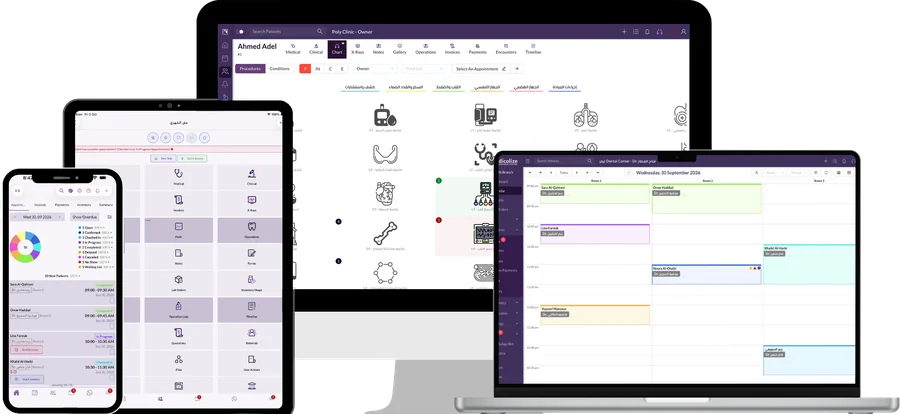
This is the part a form cannot do. The sixth physiotherapy session is only meaningful next to the first, and a dermatology protocol is judged on week six against week one. The chart repeats the same measurement and puts the two side by side.
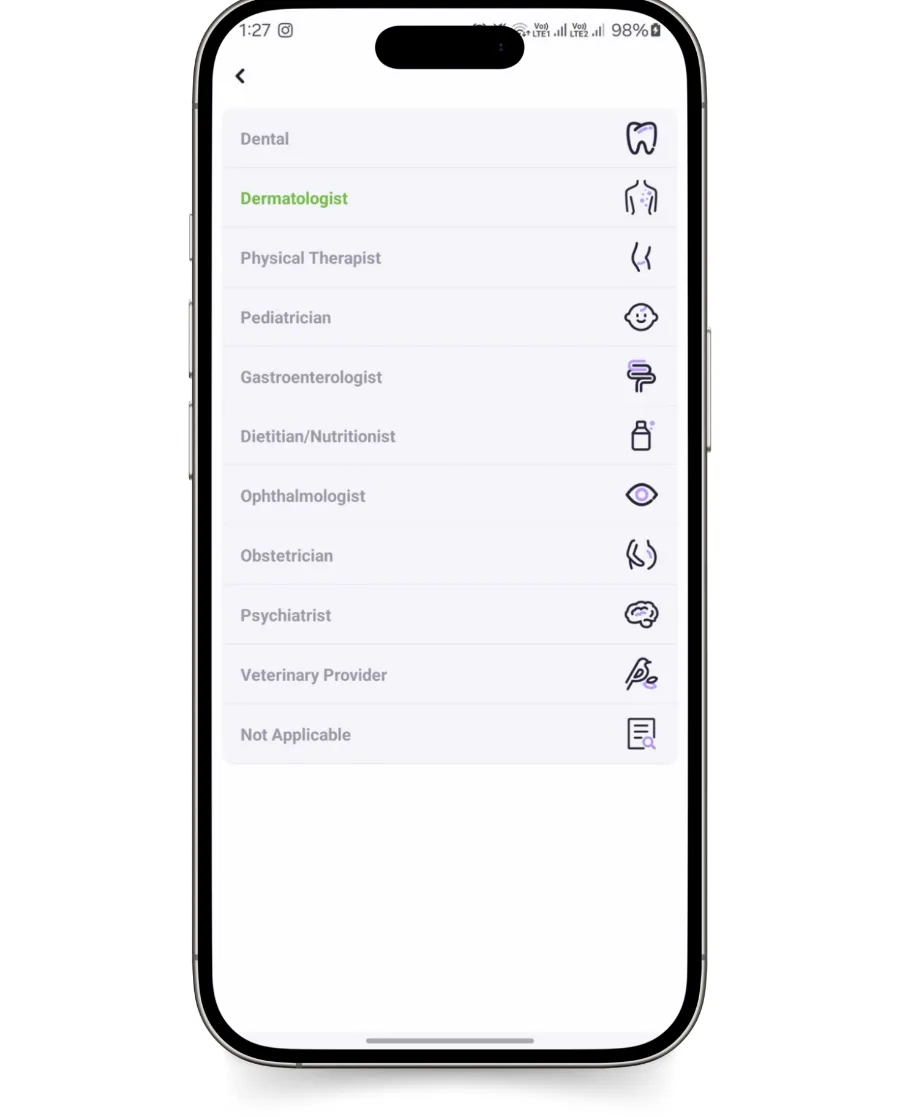
A chart that only fits the specialty the vendor had in mind is a chart most of your departments will not use. Templates are yours: per specialty, per doctor, changed without a support ticket.
The chart is written by clinicians and read by more people than that, which is why access is not all or nothing.
The last entry, the trend and the protocol in front of them before the session.
Appointments and balances without the clinical file behind them.
Which protocols complete, which stall, and at which session they stall.
Most systems give you somewhere to type. The question is whether what you typed can be compared with what you typed last month.
No sign-up and no form: the file downloads directly.
A two-page initial assessment with a body diagram, range of motion and goals, plus a one-page progress report.
Download free Word · PDFSkin type, contraindications, a numbered face and body map, and a session table with settings, units and lot numbers.
Download freeIt is the clinical record of what was found and done, held against the part of the body it concerns rather than as free text per visit. In Medicolize it also carries the measurements that make a course of treatment comparable from one session to the next.
Yes. The chart switches per specialty, and dental is one of them — teeth and surfaces rather than body regions. A centre that runs dentistry alongside dermatology or physiotherapy charts all of it here, on one patient record. A practice that is only dental is better served by Dentolize, where everything is dental by default.
Yes, and in a polyclinic that is the normal setup. Dermatology charts lesions, physiotherapy charts range of motion and pain scores, psychiatry charts scales — on one patient record, so a patient seen by two departments is still one patient.
Yes, against the session and the site they belong to. Before and after images sit with the protocol they document rather than in a general attachments folder.
Whoever you decide. Access is set per role and per record type, so reception can book and take payment without the clinical file being open to them.
One medical record per patient: history, diagnoses, prescriptions, images and every visit in order. Medicolize keeps…
Read morePrice a course rather than a visit. Medicolize tracks sessions, packages and progress from the first consultation to…
Read moreOrder tests and scans from the visit, track them to the result, and attach the result to the record. Medicolize…
Read moreHalf an hour on your own services, packages and price list. Someone calls you back within a day.