Polyclinics

Polyclinic management software

A polyclinic is not several clinics in one building — or it should not be. The thing that makes it worth more than its departments is the shared patient, and that only works if there is one record rather than one per department.

One patient, several departments

A patient seen by dermatology on Tuesday and internal medicine on Thursday is one patient. Their history, allergies, medication and balance are the same in both rooms, and neither department has to ask again.
  • One patient file, opened by every department
  • Cross-referral that carries the history rather than restarting it
  • Per-department forms and charting on the same record
  • Duplicate files surfaced at registration, not discovered at month end
  • One balance per patient, whichever department billed it
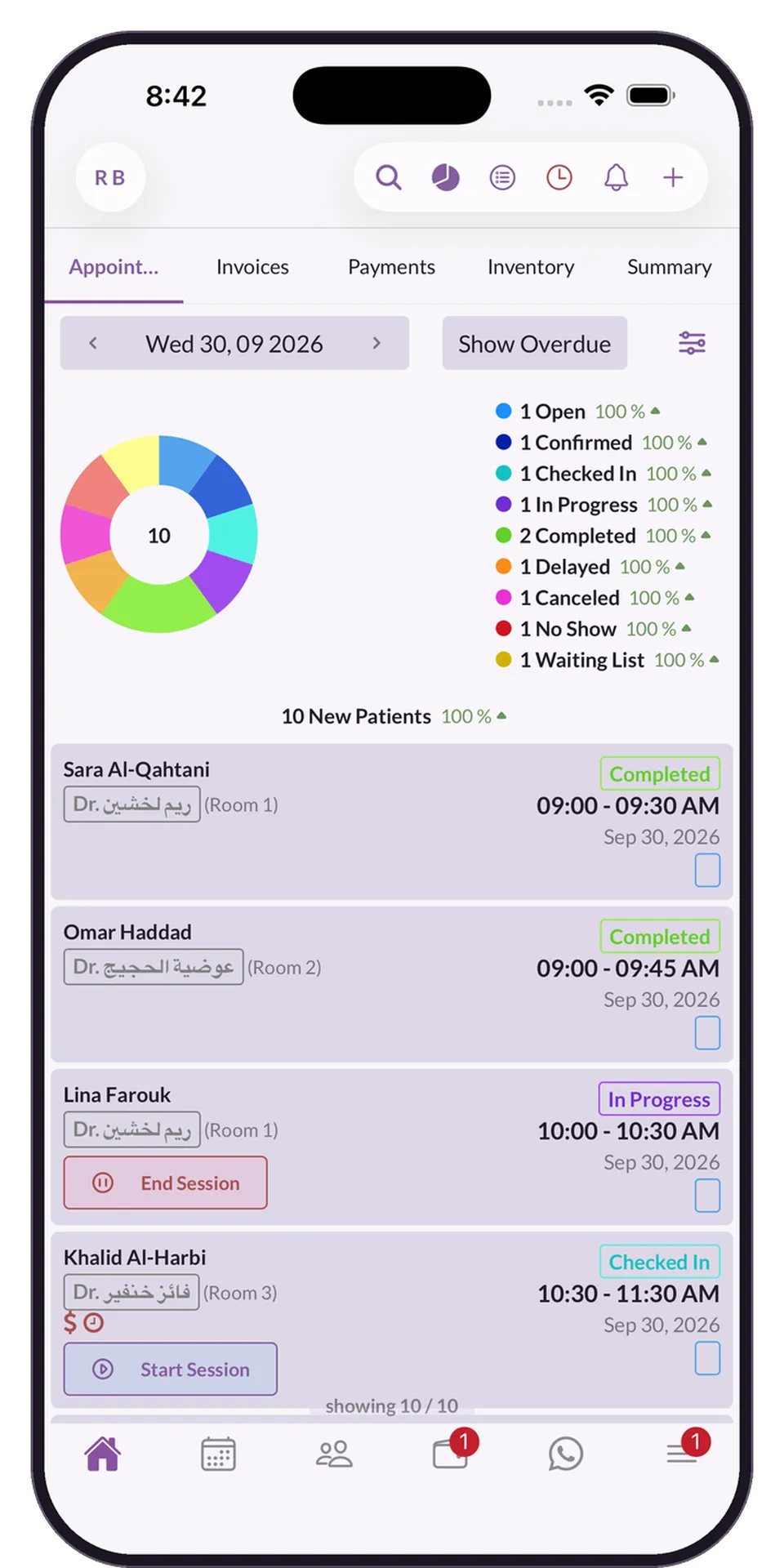
A day of appointments in the Medicolize app, with every status on one ring

Referral between departments is the whole point

The internal referral is where a polyclinic earns its margin, and it is usually the thing nobody tracks. A referral carries the clinical reason, lands in the other department’s list, and is measurable as revenue afterwards.

  • Revenue and cost attributed per department
  • Shared overhead allocated by a rule, not by argument
  • Doctor commissions computed per department's own agreement
  • Which departments refer to which, and what that is worth
  • A department that is busy and unprofitable made visible
Procedures recorded here

Reporting per department, not just per clinic

Departments have different costs, different utilisation and different margins. A single clinic-wide revenue figure hides which one is carrying the others.
  • Permissions per department and per role
  • Reception able to book across departments without clinical access
  • Stock and treasury held separately where they should be
  • Rotas that respect rooms and equipment shared between departments
  • One report for the group, and one per department, from one set of data
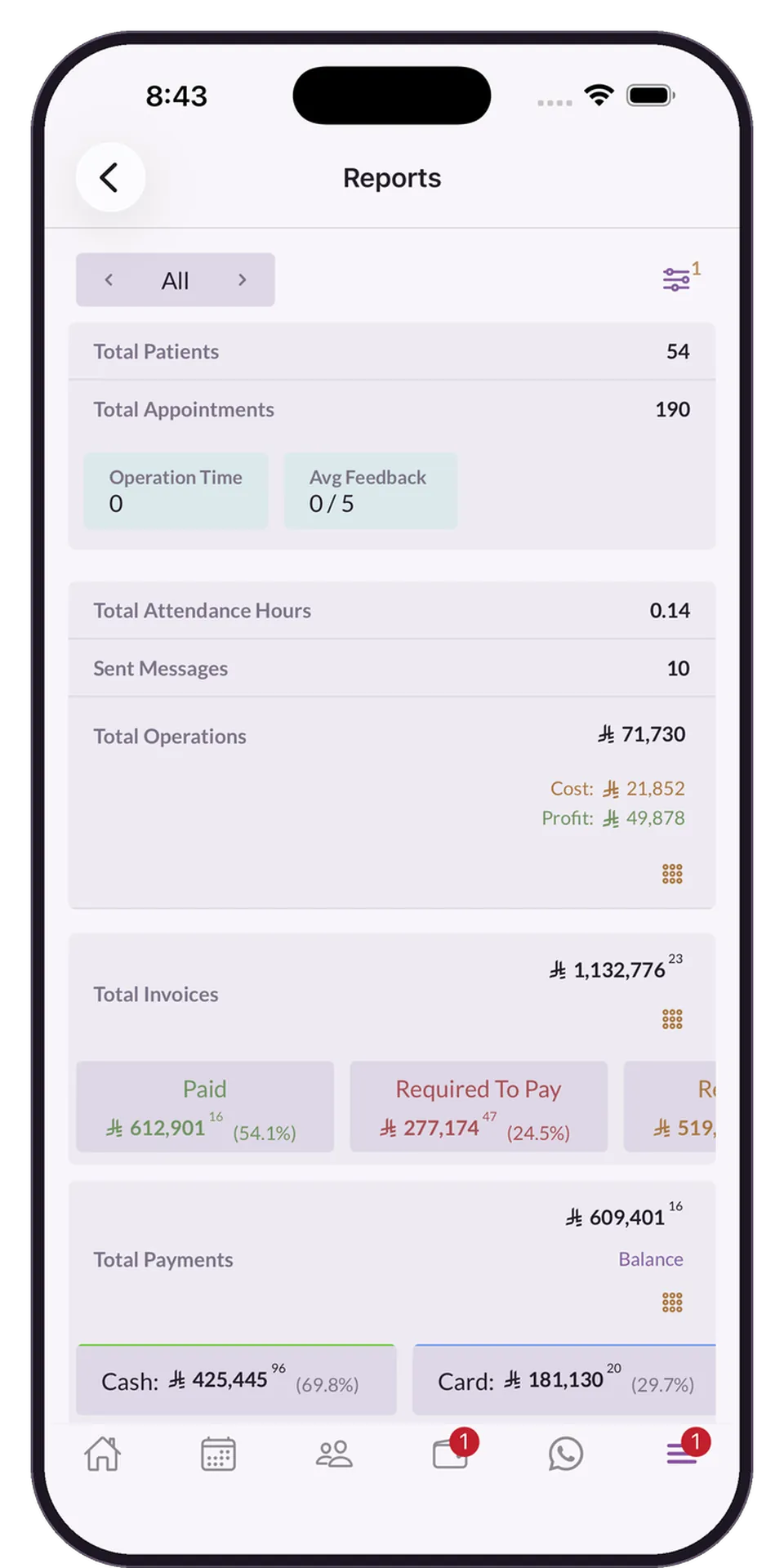
The Medicolize period report: patients, appointments, attendance hours and what was invoiced against collected

Several clinics in a building versus one polyclinic

The shared patient is the only thing that makes a polyclinic worth more than its departments, and it only exists if the record is shared.

The way it is done now

  • A file per department
  • Referral by conversation
  • One clinic-wide P&L
  • Everyone sees everything
  • Duplicate patients found later

With Medicolize

  • One record, opened by all of them
  • Referral carrying the history
  • Revenue and cost per department
  • Per department and per role
  • Surfaced at registration

What matters most here

Patient record

One record across every department, not one per doctor

Profitability

Margin per department, so you know which ones pay

Scheduling

Rooms and devices booked across departments without clashes

Staff

Permissions and commission per department

Explore the features

Questions

Polyclinics — frequently asked

Can each department have its own settings?

Yes — services, prices, consumption, commission rules and recall intervals are all set per department, while the patient record stays shared.

Can a doctor be limited to their own department?

Yes. The usual setup gives a doctor their own department’s patients and their own production figures, with the owner seeing across all of them.

Does it handle internal referrals?

Yes, with the clinical reason attached, landing in the receiving department’s list and reportable afterwards as revenue by source department.

See it on your own clinic

Half an hour on your own services, packages and price list. Someone calls you back within a day.

Book a demo WhatsApp