
How Poor Clinic Workflow Impacts Patient Experience
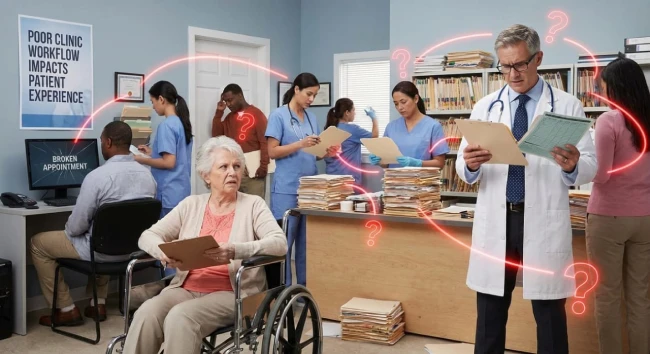
In many clinics, patient discontent begins well before the doctor even walks into the room. Patients’ perceptions of their care are influenced by lengthy wait periods, repetitive paperwork, missing follow-ups, and imprecise communication. Rarely is a lack of experience the cause of these incidents. Rather, they are a direct consequence of unsolved concerns with clinic workflow issues that occur in the background.
Inefficiencies appear at every patient touchpoint when clinic operations depend on manual procedures or disjointed systems. Patients may perceive what appears to be a minor internal delay or misunderstanding as disorder or neglect. These incidents eventually undermine loyalty, weaken trust, and harm a clinic’s reputation.
It is now necessary to comprehend how poor workflows affect the patient experience. Clinics must reconsider how they handle operations, communication, and data flow in order to provide care that seems coordinated, expert, and patient-centered in a time when people demand seamless, digital-first healthcare.
What Are Clinic Workflow Issues?
Inadequate departmental coordination of duties, data, and communication leads to problems with clinic workflow. Clinics that use manual procedures or disjointed systems frequently have these problems.
Examples of clinic workflow issues include:
- Manual forms for patient intake
- Unorganized scheduling of appointments
- Inability to access patient data in real time
- Inadequate communication between billing, labs, physicians, and reception
- Inefficient follow-up correspondence
Each of these issues has a detrimental impact on the patient experience and directly adds to clinic inefficiency.
How Clinic Inefficiency Becomes a Patient Problem
Internal systems may never be visible to patients, yet the effects are felt right away. Clinic inefficiency brought on by workflow failures include lengthy wait times, recurring inquiries, missing information, and billing problems.
Clinics find it difficult to efficiently manage patient journeys without the right patient experience software. For both patients and staff, what should be a straightforward appointment frequently becomes a stressful event.
Long Waiting Times and Appointment Delays
One of the most common complaints linked to clinic workflow issues is excessive waiting.
Poor scheduling workflows cause :
- Appointments that overlap
- No-shows result in idle time.
- Incomplete patient data causes delays
These inefficiencies erode patient trust and increase clinic inefficiencies. Regardless of the quality of care they ultimately receive, patients frequently connect lengthy wait times with inadequate organization.
Repeated Paperwork and Missing Medical History
Patient data fragmentation is another significant effect of clinic workflow problems. Patients are expected to repeat the same information at each visit when clinics lack centralized systems.
This results in:
- Anger and a decline in self-assurance
- A higher chance of medical mistakes
- Delays in consultations
By centralizing patient records and making them available to all departments, contemporary patient experience software solves this issue.
Poor Communication and Missed Follow-Ups
One of the most obvious indicators of clinic inefficiency is poor communication. High no-show rates and low follow-up compliance are problems for clinics that rely on phone calls and manual reminders.
Without automation:
- People forget their appointments.
- Instructions are not followed
- Patients experience neglect.
Advanced patient experience software ensures consistent communication through automated reminders, confirmations, and follow-ups.
Looking to improve efficiency across all departments? Discover the benefits of clinic department coordination software.
Billing Confusion and Financial Stress
One of the most delicate areas impacted by problems with clinic operations is billing. Uncertain invoices, slow insurance processing, and patient annoyance are the results of disconnected finance systems.
Clinic billing inefficiencies lead to:
- Delays in payments
- An increase in grievances
- Decreased adherence to patients
Patient trust is greatly increased when clinical data is connected with billing operations.
Emotional Impact of Poor Clinic Workflow
Interactions with healthcare providers are emotionally fraught. Patients’ tension and anxiety are increased by workflow errors.
When a clinic is inefficient, patients frequently experience:
- Disregarded
- Hurried
- Unimportant
Long-term effects on patient retention and clinic reputation result from this emotional reaction.
Why Patient Experience Software Is Essential
It takes more than just adding more employees to solve clinic workflow problems. Adopting intelligent patient experience software that rethinks system-level workflows is the true solution.
These systems focus on:
- Automating repetitious tasks
- Centralized data access
- Real-time departmental collaboration
- Easy communication with patients
This approach reduces clinic inefficiencies while raising the standard of care.
How Automation Reduces Clinic Workflow Issues
Automation eliminates human mistakes and manual bottlenecks from day-to-day processes.
Important automated processes consist of:
- Intake of digital patients
- Reminders and confirmations of appointments
- Automated feedback gathering
- Follow-up correspondence
Automation frees up workers to concentrate on patient care rather than administrative recovery by decreasing clinic inefficiencies.
Centralized Systems and Workflow Efficiency
Centralized systems enhance coordination and do away with redundant effort.
They lessen problems with clinic workflow by:
- Combining medical records
- Linking departments
- Giving updates in real time
This level of coordination is impossible without modern patient experience software.
medicolize: Eliminating Clinic Workflow Issues at the Core
medicolize’s completely integrated clinic management solution is designed to address problems with clinic workflow.
medicolize links:
- Scheduling appointments and reception
- Physicians and patient records
- Diagnostics and laboratories
- Billing and accounting
- CRM and contact with patients
This integration improves patient satisfaction while drastically reducing clinic inefficiencies.
Improving Patient Experience with medicolize
medicolize functions as advanced patient experience software, managing the entire patient journey digitally.
Important patient-facing elements consist of:
- Medical history input via QR code
- Automated reminders for appointments
- WhatsApp bot
- Digital feedback gathering
Throughout the entire encounter, patients feel informed, appreciated, and respected.
Clinic Inefficiency Reduction Without Increasing Staffing
Increasing productivity without adding more employees is one of medicolize’s main benefits.
By removing problems with clinic workflow:
- Employee output increases
- Errors decline
- Smoother patient flow
Clinics can expand without taking on more administrative work.
Why Resolving Clinic Workflow Problems Gives You a Competitive Edge
Success in the cutthroat healthcare industry is determined on the patient experience.
Clinics that eliminate clinic workflow issues:
- Hold onto more patients
- Get better ratings
- Boost financial results
- Establish enduring trust
Patient experience software and technology-driven workflows are increasingly required, not optional.
Conclusion
Every day, poor workflows silently harm the patient experience. Unresolved clinic workflow issues such as lengthy wait times and inadequate communication, increase clinic inefficiency and drive patients away.
Clinics may improve medical delivery, alter operations, and create patient journeys that foster loyalty and trust by implementing integrated systems like medicolize and current patient experience software.
medicolize transforms efficiency into a quantifiable advantage by helping clinics transition from disjointed operations to smooth, patient-centered workflows.
